Understanding Traffic Lights and RI on UK Packaging
How to Interpret Front-of-Pack Labels and Nutrition Information
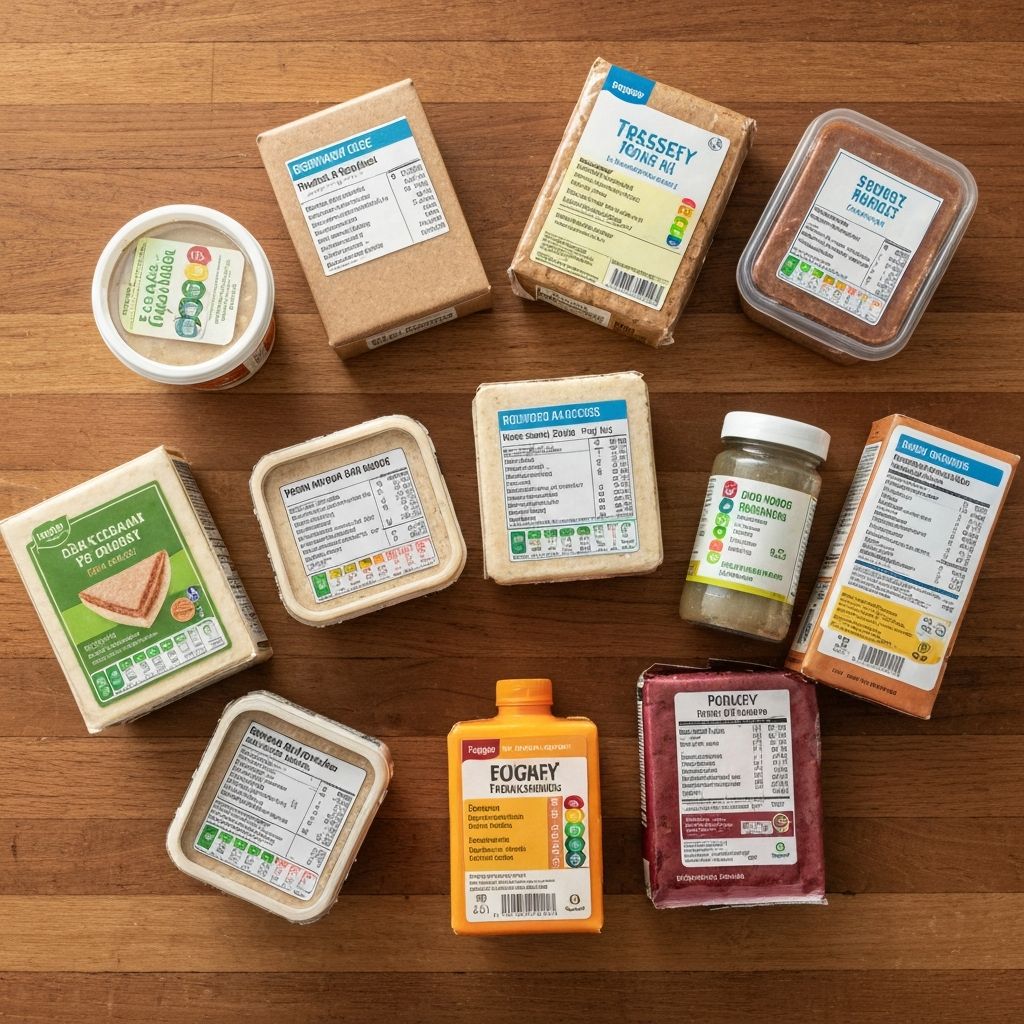
Front-of-Pack Traffic Light Labelling
Many UK supermarket products display traffic light colours on the front of packaging as a quick visual reference for nutrient content. These colours indicate whether nutrient levels are low, medium, or high according to defined thresholds.
| Colour | Meaning | Definition |
|---|---|---|
| Green | Low | The nutrient content per serving is in the low range for that food category |
| Amber/Yellow | Medium | The nutrient content per serving is moderate relative to thresholds |
| Red | High | The nutrient content per serving is relatively high according to specified thresholds |
Traffic lights typically cover four nutrients: fat, saturated fat, sugar, and salt. These colours provide immediate visual feedback without requiring detailed calculation.
Recommended Intake (RI) Percentages
UK food labels display RI percentages for key nutrients. RI stands for "Recommended Intake" and represents the daily recommended intake for an average adult (based on a 2000 kcal daily diet).
| Nutrient | Daily RI Value | RI % Meaning |
|---|---|---|
| Fat | 70g | How much of daily fat intake this serving represents |
| Saturated Fat | 20g | How much of daily saturated fat intake this serving represents |
| Sugar | 90g | How much of daily sugar intake this serving represents |
| Salt | 6g | How much of daily salt intake this serving represents |
| Energy | 2000 kcal | How much of daily energy intake this serving represents |
RI percentages are population-average estimates based on standard reference values. Individual needs vary considerably based on factors including age, size, activity level, and metabolic differences.
Reading the Nutrition Information Panel
All UK supermarket packaged foods display standardised nutrition information on the back or side of packaging. This information is presented per serving or per 100g (or both).
Key Components:
- Energy: Shown in both kilojoules (kJ) and kilocalories (kcal). One kcal = 4.18 kJ.
- Macronutrients: Fat, of which saturated, carbohydrates, of which sugars, protein, and fibre are typically listed.
- Sodium: Listed separately from salt. Salt content = sodium × 2.5.
- Serving Size: Always check what portion the information is based on. This varies significantly between products.
The serving size used for nutrition labelling may differ from typical portion consumption. Always check this specification to correctly interpret the numbers.
Comparing Similar Products
UK nutrition labelling allows direct comparison between similar products. When comparing, ensure you're using the same unit (per 100g is most accurate) and check all relevant nutrients.
| Product | Energy per 100g | Sugar per 100g | Traffic Lights |
|---|---|---|---|
| Product A (porridge) | 389 kcal | 0.7g | Green, Green, Green, Green |
| Product B (breakfast cereal) | 375 kcal | 33g | Green, Green, Red, Green |
Using the per-100g values allows fair comparison regardless of recommended serving size. This removes serving size variations that manufacturers may have built into different products.
Understanding Ingredient Lists
UK food packaging displays complete ingredient lists in descending order by weight. The first ingredient is the primary component, and the list continues to the smallest ingredient.
Reading ingredient lists provides transparency about what the product contains. Additives, preservatives, and other components are disclosed. Sugar appears under various names in ingredient lists, including glucose syrup, honey, fruit juice concentrate, and many others.
Allergen information is highlighted separately and in bold on UK packaging to inform consumers with allergies or intolerances. Allergens are also listed by ingredient.
Use by and Best Before Dates
UK packaging displays either "Use by" or "Best before" dates with different meanings:
- Use by: Food safety date. Do not consume after this date due to potential bacterial growth.
- Best before: Quality date. The food remains safe after this date but may deteriorate in quality (taste, texture).
Freezing can extend the life of products. The best before date typically assumes room-temperature storage, and freezing may allow storage beyond this date (with variations depending on product type).
Portion Size Context
Serving sizes defined on packaging may differ from typical consumption amounts. A packet may contain multiple "servings" as defined by the manufacturer, but be consumed as a single meal by the person eating it.
Always check the serving size specified on the nutrition label and verify whether you're comparing products on a per-serving or per-100g basis. Using per-100g values removes this variable and allows fair comparison.
Informational Content: The information presented here is educational and factual about food labelling and composition. Individual energy needs, food preferences, and dietary choices vary widely. This content does not provide nutritional recommendations or make claims about outcomes.
Explore Other Food Categories
Browse additional comparisons and informational guides about UK supermarket foods.
View all explorations